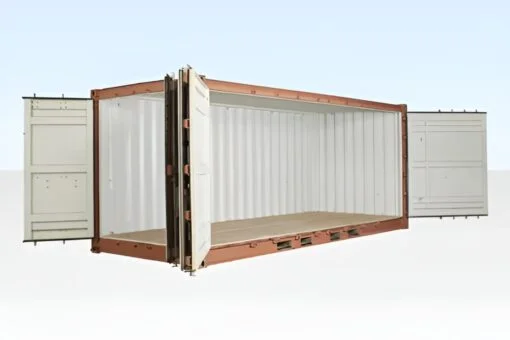

Description
20ft container high cube
Anyone shopping around for a shipping container eventually runs into two nearly identical-sounding terms: standard containers and high cube containers. The difference seems minor at first glance, but once you dig into actual project planning, that gap in height turns out to shape almost everything else, from what you can build to how comfortable the finished space feels. This guide breaks down the 20ft high cube container specifically, what sets it apart, and how to decide if it's the right pick for your project.
Getting the Dimensions Straight 20ft container high cube
A 20ft high cube container keeps the same footprint as a standard 20-foot unit: about 20 feet in length and 8 feet in width. Where it differs is the exterior height, which climbs to roughly 9.5 feet compared to the standard 8.5 feet. Inside, once you factor in the floor structure, you're typically looking at close to 8 feet 10 inches of clear interior height.
It's a small number on a spec sheet, but it changes the character of the space in a way that's easy to underestimate until you're standing inside one mid-conversion. A standard container with insulation, subfloor, and ceiling panels installed can start to feel noticeably tight. The high cube version has enough buffer built in that those same finishing layers don't eat into your headroom in the same way.
Who Actually Needs the Extra Height 20ft container high cube
Not every project benefits equally from the high cube upgrade, so it's worth being honest about whether it matters for your specific use case.
Worth it for: home offices, tiny homes, studios, workshops, retail conversions, or anything where people will spend hours standing or moving around inside. The extra vertical space also matters if you're running ductwork, recessed lighting, or ceiling-mounted storage, since those all eat into usable height. 20ft container high cube
Less critical for: straightforward storage use where nothing is being built out on the interior. If you're just parking equipment, tools, or inventory inside, the standard height container does the job just as well, usually at a slightly lower price point.
Structural and Practical Considerations
Because high cube containers are taller, they carry a marginally higher center of gravity, something worth keeping in mind if you're planning to stack multiple units or place one in an area with strong prevailing winds. Reputable suppliers and installers account for this in foundation and anchoring recommendations, but it's a good question to raise directly if your project involves stacking or an exposed site.
The taller wall height also opens up design options that standard containers can't accommodate as easily. Clerestory windows near the roofline, taller doors, and loft-style storage all become more realistic with the added vertical space, giving designers more room to get creative without needing to combine multiple units.
Sourcing a 20ft High Cube Container
Availability varies quite a bit by region, since high cube units make up a smaller share of the overall shipping fleet compared to standard containers. Buyers near major ports typically find better selection and pricing, while inland buyers may need to factor in additional trucking costs, or wait longer for the right unit to become available locally.
When comparing suppliers, always confirm condition ratings clearly: one-trip or new units for the best structural condition, cargo-worthy used units for a solid mid-range option, or wind and watertight units if budget is the primary concern and heavy modification isn't planned. The CSC plate attached to every container lists official certified dimensions, which is the most reliable way to confirm you're actually getting a genuine high cube unit rather than a standard container mislabeled by a seller.
Budgeting for Conversion
Buying the container itself is usually just the starting point. Delivery, site preparation, foundation work, insulation, electrical, plumbing (if applicable), and interior finishing all add to the total project cost. High cube units tend to run somewhat higher than standard containers of the same length due to the additional steel, but for conversion projects, most buyers find that cost difference easy to justify once they see how much more livable the finished interior feels.
Getting multiple quotes from local suppliers, rather than relying on generic online price estimates, tends to give a far more accurate sense of what your specific project will actually cost, since regional shipping demand and container availability shift pricing more than people expect.
Making the Final Call
If your project involves any kind of interior finishing where people will spend meaningful time inside, the 20ft high cube container is almost always worth the modest price premium over a standard unit. The extra height pays for itself in comfort, design flexibility, and room for mechanical systems that a standard container simply can't offer without feeling cramped. 20ft container high cube
What's the actual height difference between a standard and high cube container? A standard 20ft container stands about 8.5 feet tall, while the high cube version reaches roughly 9.5 feet, giving about one additional foot of exterior height and slightly less once interior flooring is factored in.
Is a high cube container more expensive than a standard one? Generally yes, since it requires more steel to manufacture. The price gap is usually modest compared to the overall cost of a conversion project, and most buyers find it worthwhile for anything beyond basic storage.
Can a high cube container be stacked like a standard one? Yes, though its slightly higher center of gravity means proper anchoring and foundation planning matter more, especially in windy locations or multi-unit stacking arrangements.
Do all suppliers carry high cube containers? Not always. High cube units make up a smaller portion of the global shipping fleet than standard containers, so availability can vary significantly by region and supplier.
How can I verify a container is genuinely a high cube model? Check the CSC plate mounted on the container, which lists certified official dimensions. This is more reliable than estimating height visually or trusting a listing description alone.
Is the extra height noticeable once a container is converted into livable space? Very much so. Once insulation, flooring, and ceiling finishes are added, that extra foot of height often makes the difference between a space that feels comfortable and one that feels cramped, particularly for taller individuals. 20ft container high cube


Reviews
There are no reviews yet.